
Top Mobile App Development Frameworks in 2025
The world of mobile apps is growing rapidly, and user expectations are higher than ever. Developers require reliable, scalable, and efficient mobile app development frameworks to keep pace. In 2025, the emphasis is on performance, cross-platform compatibility, and seamless user experiences. Whether you’re building for Android, iOS, or both, the right framework can specify the success of your project.
Let’s dive into the top mobile app development frameworks dominating in 2025.

1. Flutter
Flutter, supported by Google, continues to lead in 2025 due to its fast development cycle and attractive native-like UI. Its growing community and robust plugin ecosystem make it easier to combine complex features without depending heavily on native code. Developers can target multiple mobile, web, and desktop platforms with a single codebase. Additionally, Flutter’s hot reload feature significantly speeds up testing and iteration, improving developer productivity and user experience.
key Features
1. Hot reload for faster debugging
Hot reload is a Flutter feature that allows developers to see code changes reflected in the app without restarting it. This speeds up debugging and UI development by keeping the application’s current state while updating only the modified code.
2. Rich widget library
The rich widget library in Flutter delivers a wide range of pre-designed and customizable widgets for creating complex UIs easily. From primary elements like buttons and text to advanced layouts and animations, these widgets help build responsive, native-like interfaces across different platforms.
3. Strong community support
Strong community support tells that Flutter has a large and active developer base that contributes to its growth. This contains open-source plugins, learning resources, forums, and quick help for troubleshooting, making development smoother and more structured.
Flutter continues to be a standout among modern Mobile App Development Frameworks, offering speed, versatility, and a sleek UI toolkit perfect for developers aiming for broad platform support.

2. React Native
Powered by Meta, React Native remains a selected framework for many developers. It helps code recycle across platforms and integrates efficiently with native components. With its strong JavaScript foundation, developers can quickly get started and build strong mobile applications. The big ecosystem of libraries and tools, along with functional community support, improves its workability and scalability for both startups and enterprise-level applications.
Key Features:
1. JavaScript-based
JavaScript-based means React Native uses JavaScript as its core programming language, allowing web developers to easily convert to mobile development. It helps the building of dynamic and interactive apps with a standard syntax and extensive library support.
2. Native performance
Native performance in React Native guides its ability to deliver smooth and responsive user experiences by using native features under the hood. This permits applications to perform closely to those built with platform-specific languages like Swift or Kotlin.
3. The dynamic ecosystem of libraries
The dynamic ecosystem of libraries in React Native offers a wide range of pre-built solutions for everything from navigation to animations and API integration. This enables developers to save time, reduce manual coding, and expand application functionality with ease.
React Native has consistently been one of the top choices among Mobile App Development Frameworks, especially for teams leveraging JavaScript expertise across platforms.
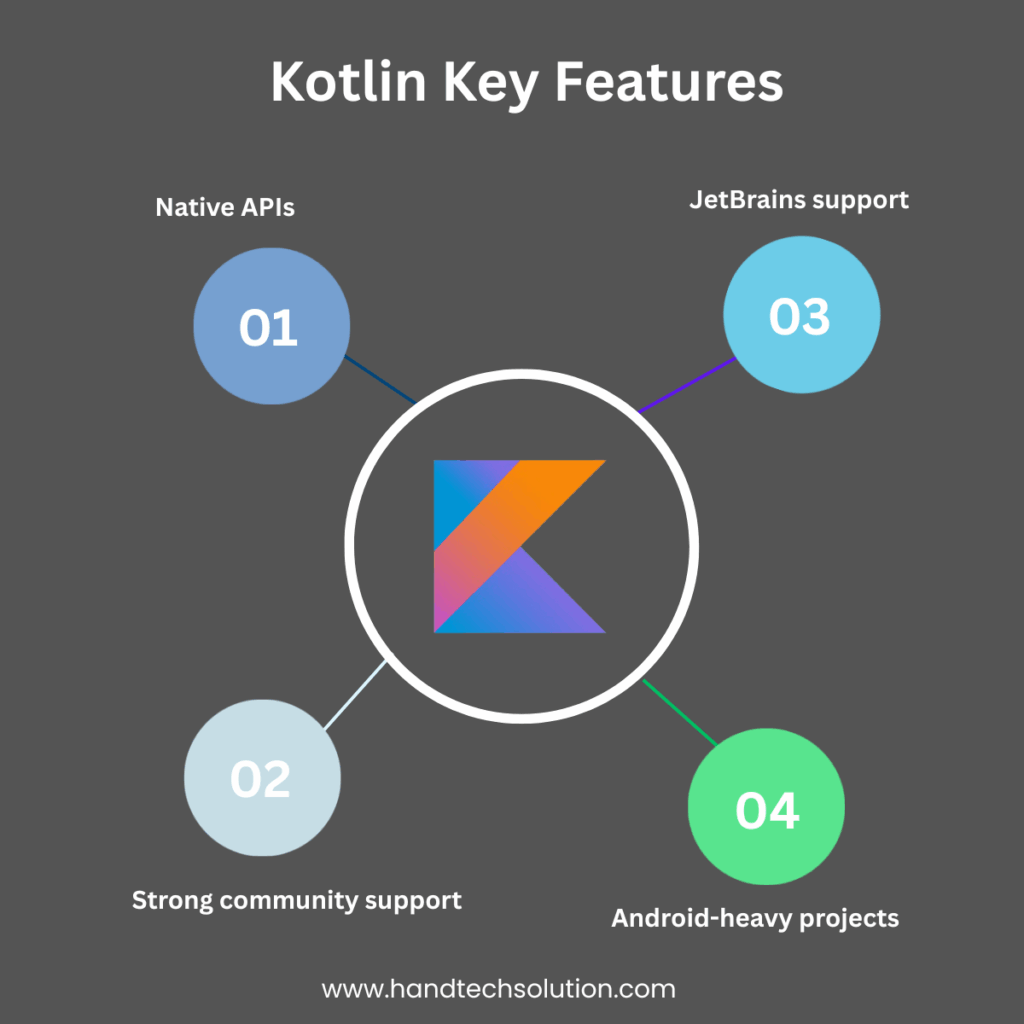
3. Kotlin Multiplatform Mobile (KMM)
Kotlin Multiplatform Mobile is achieving momentum in 2025 for teams focused on native performance. It allows developers to share logic across Android and iOS while writing platform-specific UI. This approach provides high performance and full access to native APIs, making it excellent for projects that require platform-specific optimizations. Additionally, Kotlin’s brief syntax and strong tooling support make it easier for teams to collaborate and maintain code across multiple platforms.
Key Features
1. Native APIs
Native APIs refer to the group of platform-specific interfaces that allow apps to directly interact with the device’s hardware and software features, such as the camera, GPS, or sensors. Accessing these APIs makes sure the application can use refined features and deliver a seamless user experience on both Android and iOS.
2. JetBrains support
JetBrains supports the backing and development tools provided by JetBrains, the company behind Kotlin. Their integrated development environment and IntelliJ IDEA deliver strong features like code completion, debugging, and testing support, making Kotlin Multiplatform Mobile development more coherent and graceful for developers.
3. Strong for Android-heavy projects
Strong for Android-heavy projects means Kotlin Multiplatform Mobile is mainly beneficial for teams focusing on Android development, as Kotlin is the best language for Android applications. It allows developers to re-utilize code between Android and iOS while still taking full advantage of Kotlin’s attributes and performance optimizations, making it a perfect choice for projects where Android is the primary platform.
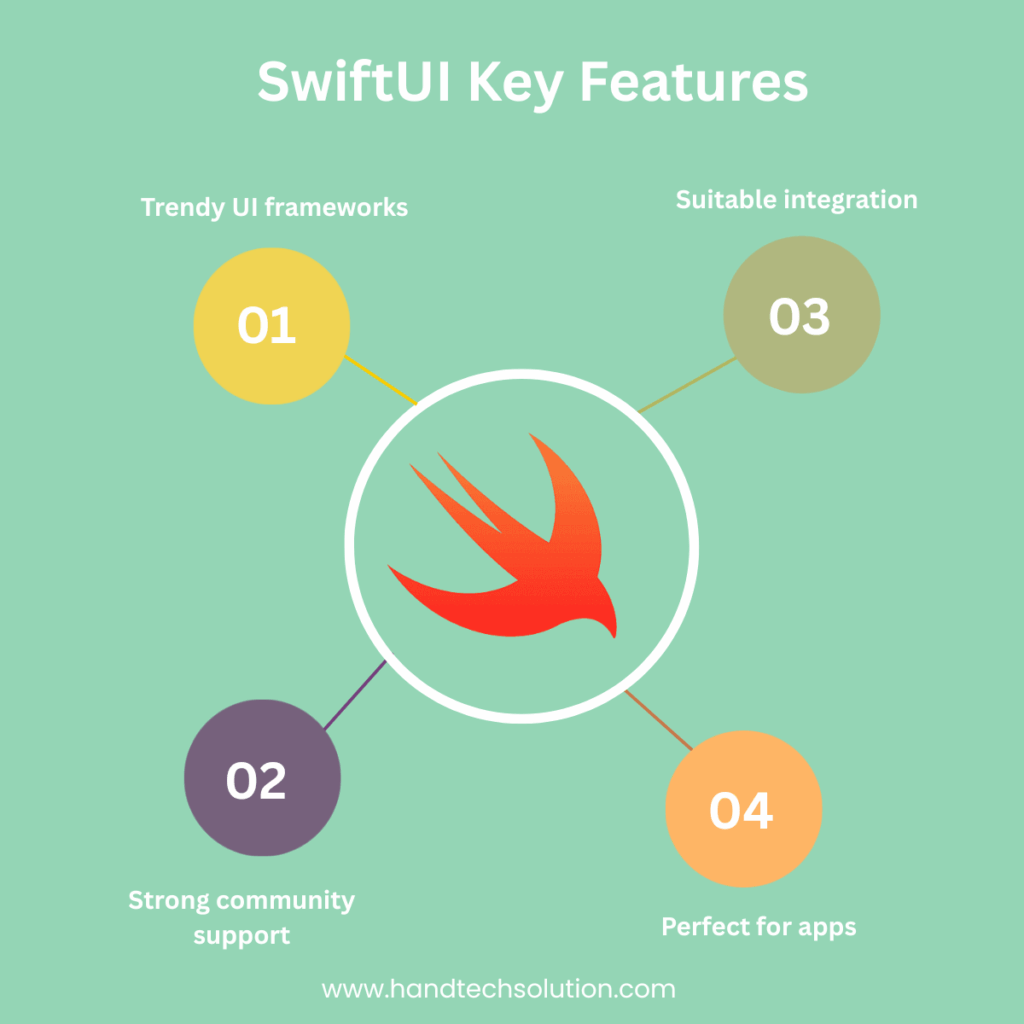
4. SwiftUI Xamarin-Mobile App Development Frameworks
While not cross-platform, the combination of SwiftUI (for iOS) and Jetpack Compose (for Android) has become famous due to their defining UI approaches and performance. These trendy UI frameworks streamline app development by using informative syntax, making code more comfortable to read and maintain. They also give an excellent performance by utilizing native components, confirming smooth and responsive user experiences on both iOS and Android devices.
Key Features
1. Trendy UI frameworks
Trendy UI frameworks like SwiftUI and Jetpack Compose use a defining approach, where developers define the UI and its condition. They deliver live previews, reflexive layouts, and native performance for coherent app development. These frameworks use a reactive programming model to keep UI elements aligned with data. This decreases complexity and speeds up development.
2. Suitable integration with native SDKs
Suitable integration with native SDKs means frameworks like SwiftUI and Jetpack Compose can easily interact with platform-specific software development kits. This allows developers to obtain native features, such as the camera, GPS, and sensors, while still using the framework’s informative UI approach. This integration provides optimal performance and perfect use of native abilities.
3. Perfect for apps where user experience is a top priority
SwiftUI and Jetpack Compose are perfect for apps that prioritize user experience. Their assertive approach confirms smooth, reflexive, and responsive UIs. With native performance, they provide flawless operation across devices. This results in a highly coherent and appealing user experience.
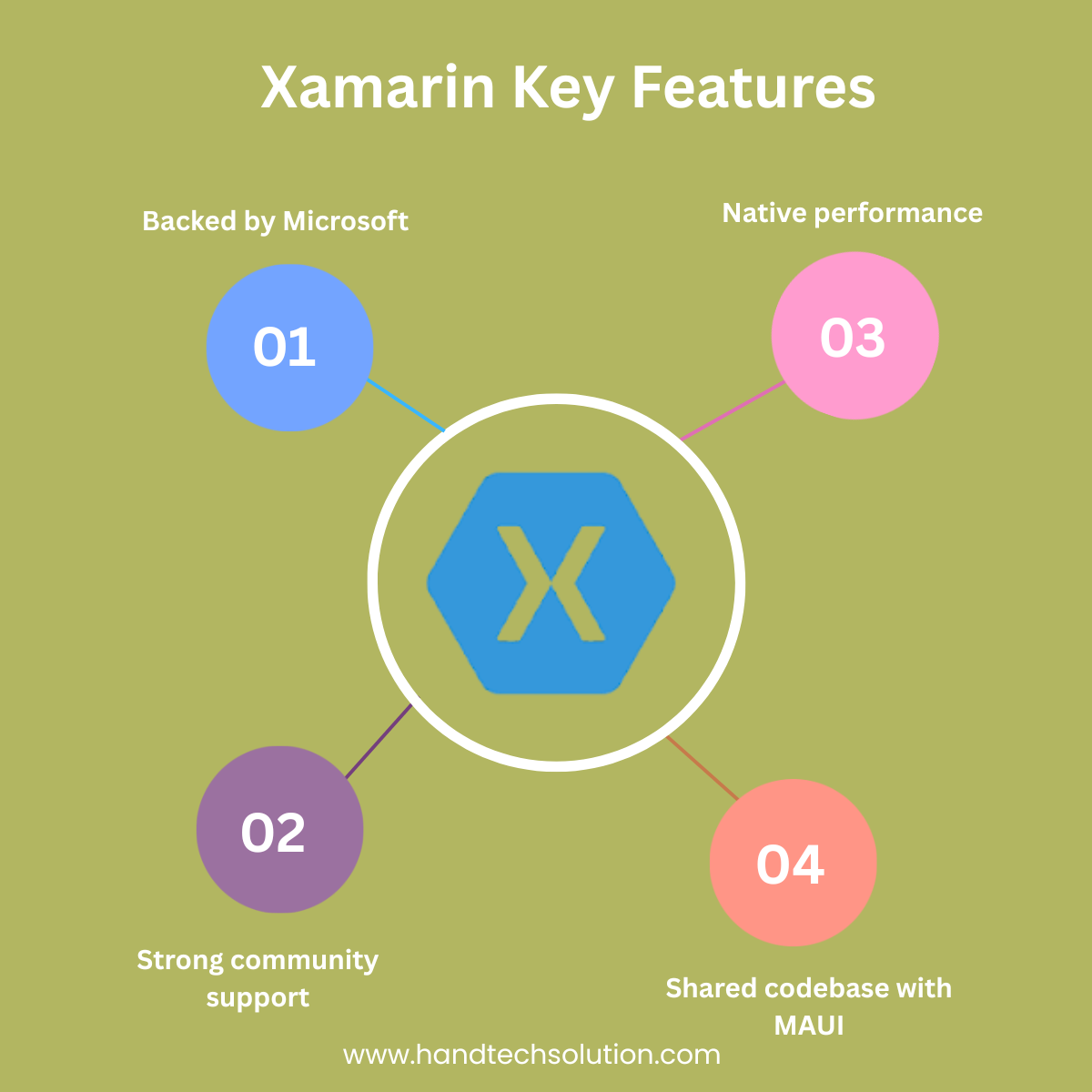
5. Xamarin –Mobile App Development Frameworks
Xamarin will remain applicable in 2025, particularly for enterprise-level applications. Now combined with .NET MAUI, it helps build native apps using C# and .NET. This integration enables a suitable development experience across mobile, desktop, and web platforms. With robust support from Microsoft, Xamarin, and .NET, MAUI delivers powerful tools and resources, making it a reliable choice for large-scale applications.
Key Features
1. Backed by Microsoft
Backed by Microsoft tells Xamarin and .NET MAUI are supported and developed by Microsoft, confirming long-term strength, regular updates, and access to a wide range of development tools and resources. This backing delivers confidence for enterprise-level applications, presenting a solid foundation for developers.
2. Shared codebase with MAUI
A shared codebase with MAUI means that Xamarin, now combined with .NET MAUI, allows developers to write code once and place it across multiple platforms, including iOS, Android, Windows, and macOS. This decreases duplication of effort, facilitates maintenance, and confirms consistency across various platforms.
3. Hybrid platform with native performance
A Hybrid platform with native performance means that Xamarin and .NET allow developers to build apps that work across multiple platforms while still giving the performance and responsiveness of native applications. By using shared code for business logic and leveraging platform-specific APIs, they combine the efficiency of a hybrid approach with the optimized performance of native apps
Conclusion
As mobile technology continues to evolve for your business needs, choose the right Mobile App Development Frameworks in 2025. Whether you prioritize fast development cycles, cross-platform reach, native performance, or enterprise-grade stability, the options available today cater to every need. React Native is powerful with JavaScript and a comprehensive library ecosystem. Flutter is exceptional with its smart user interface (UI) and hot reload. Kotlin Multiplatform Mobile is flawless for teams that demand native performance and shared logic. For platform-specific apps, SwiftUI and Jetpack Compose offer top-tier UI tools. Xamarin with .NET MAUI is a solid, enterprise-ready choice backed by Microsoft.
In a competitive digital landscape, staying current with the best Mobile App Development Frameworks will ensure your application stands out. Ultimately, your choice depends on your goals, team, and growth plans. With the right Mobile App Development Frameworks, you can provide powerful, fast, and user-friendly apps that succeed in today’s competitive mobile world.
